


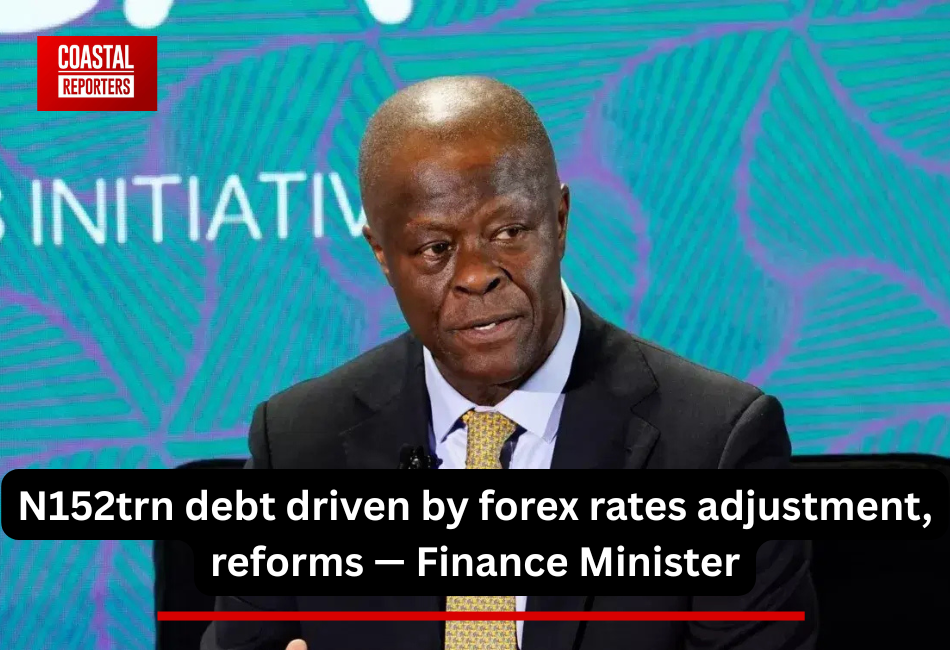
LAGOS — The Federal Government has defended Nigeria’s soaring public debt, now estimated at about ₦152 trillion, arguing that the rise is largely the result of enhanced transparency and exchange-rate revaluation rather than excessive new borrowing.
Speaking at the presentation of the Nigerian Economic Summit Group (NESG) 2026 Macroeconomic Outlook in Lagos, the Coordinating Minister of the Economy and Minister of Finance, Mr. Wale Edun, said the Tinubu administration deliberately chose openness and fiscal discipline over opaque accounting practices.
According to Edun, Nigeria’s total public debt stands at just over $100 billion, noting that ₦30 trillion previously classified as Ways and Means advances has now been formally recognised in the debt stock. He added that exchange-rate adjustments account for a significant portion of the increase, not fresh borrowing.
“Debt service remains a challenge, but transparency has improved significantly,” Edun said, stressing that the government has continued to meet all statutory obligations. “Despite fiscal pressures, salaries, pensions and debt service have been paid. That reflects our commitment to discipline and accountability.”
Reviewing the performance of the 2025 Budget, Edun said Nigeria’s fiscal position demonstrated resilience despite global and domestic headwinds. He disclosed that the fiscal deficit stood at 3.4 per cent of GDP, slightly above the Fiscal Responsibility Act benchmark, reflecting ongoing adjustment efforts.
He acknowledged that revenue performance remained constrained due to shortfalls in oil and gas earnings, though non-oil revenue showed signs of improvement. He also said fiscal federalism reforms had strengthened state finances, with many states now recording budget surpluses of over three per cent, allowing increased spending on health, education and public services.
Edun maintained that the administration’s difficult economic reforms had delivered macroeconomic stabilisation and positioned the country for consolidation. “After more than two years of implementing transformative and politically difficult reforms, Nigeria is now at the threshold of consolidation,” he said, warning that policy reversal or hesitation would be costly.
He said longstanding economic distortions had been dismantled, citing the removal of fuel subsidies, preferential foreign exchange access and rent-seeking structures. “These reforms have created a more level playing field where productivity, innovation and value creation—not arbitrage—drive success,” he said.
On investor confidence, Edun said Nigeria’s reforms were receiving positive international recognition. He noted improved engagement at the World Bank Annual Meetings, Nigeria’s exit from the FATF grey list, and its removal from the European Union’s high-risk third-country list, alongside improved credit rating outlooks.
Addressing growth and inflation, Edun said economic activity was broadening, with 27 sectors growing above three per cent, although manufacturing and agriculture still lag behind expectations. He described inflation as a major challenge but said its trajectory reflects the resolve of monetary authorities, stressing that inflation disproportionately affects the most vulnerable.
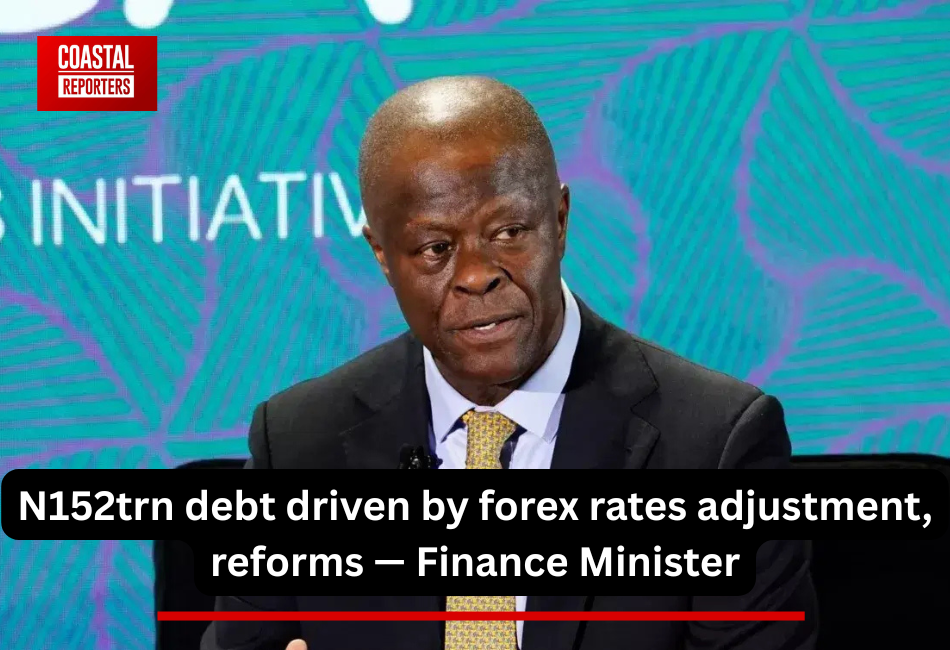
Edun also highlighted the strengthening of Nigeria’s capital market, describing it as a key driver of growth financing. He said improvements had been recorded in trade balance, foreign exchange reserves and stock market capitalisation, now nearing $500 billion, a level that enhances global market credibility.
Looking ahead, the minister projected economic growth of about 4.68 per cent in 2026, with inflation averaging 16.5 per cent and the exchange rate benchmarked at ₦1,400 per dollar. He said the 2026 Budget, themed “Budget of Consolidation, Renewed Resilience and Shared Prosperity,” aims to translate macroeconomic stability into tangible outcomes such as food security, electricity, housing and employment.
“Our task is enormous, but so is our resolve,” Edun said. “We will not retreat from economic transformation. Stability must translate into inclusive, job-rich growth for all Nigerians.”
Mixed reactions from experts
Reacting to the minister’s remarks, Oluropo Dada, 13th President of the Chartered Institute of Stockbrokers (CIS), said available data shows that the Federal Government raised over ₦7 trillion from the FGN bond market in the last two years, excluding Treasury bills.
He noted that persistent fiscal deficits, by definition, require financing, and argued that new borrowing has played a material role in sustaining government operations. While acknowledging the impact of exchange-rate revaluation and improved transparency, Dada stressed that fiscal sustainability risks remain amid weak revenue growth, calling for clearer reconciliation between deficits, borrowing and debt outcomes to preserve market confidence.
Similarly, David Adonri, Vice Executive Chairman of High Cap Securities Limited, praised the recognition of previously hidden debt but argued that legacy obligations alone do not explain the current debt burden. He warned that continued borrowing risks deepening Nigeria’s debt trap.
Former CIS President Olatunde Amolegbe said the key issue is debt sustainability rather than the absolute size of the debt. While Nigeria’s debt-to-GDP ratio of about 36 per cent suggests no immediate danger, he cautioned that the debt-to-revenue ratio calls for prudence.
In his analysis, Clifford Egbomeade, an analyst and communications expert, said Edun’s explanation aligns with public finance accounting principles. He noted that most of the increase reflects recognition of Ways and Means advances and exchange-rate revaluation of foreign debt, rather than a borrowing spree.
However, Egbomeade warned that higher naira-denominated debt still amplifies debt servicing pressures in an environment of weak revenue. He stressed that while transparency strengthens credibility, long-term sustainability will depend on revenue mobilisation, disciplined spending and tighter controls on central bank financing.