


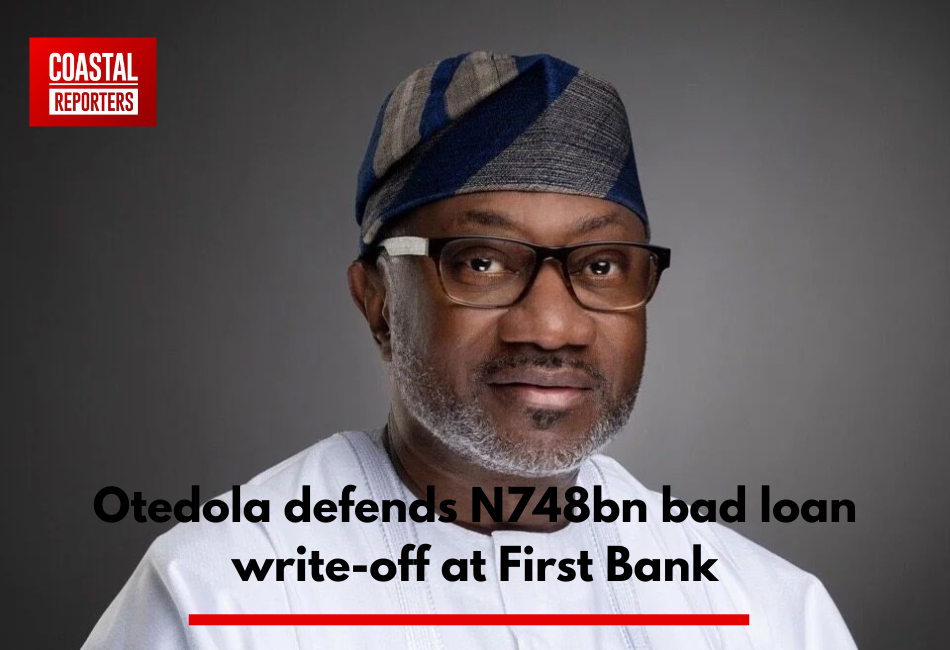
The Group Chairman of First Bank Holdings, Mr. Femi Otedola, has justified the company’s decision to book a one-off charge of ₦748 billion to eliminate legacy non-performing loans, describing it as a bold but necessary move to secure long-term stability, despite the sharp impact on reported profits.
In a post on his X (formerly Twitter) handle on Saturday, the billionaire investor revealed that the extensive provisioning led to a 92 per cent drop in the holding company’s profit. He explained that the decision was in line with the Central Bank of Nigeria’s directive urging banks to transparently address bad loans rather than postpone them.
“At First HoldCo, we chose to clean house properly. We took a massive one-time hit of ₦748bn to acknowledge old bad loans instead of pretending they don’t exist. That is why profits appear to have crashed by 92 per cent. It’s a painful headline, but a serious long-term decision,” Otedola wrote.
According to him, the move was aimed at closing the chapter on problematic loans accumulated in previous years and restoring confidence among stakeholders.
“Why now? Because the CBN is pushing banks to stop kicking problems down the road. First HoldCo has effectively drawn a line under legacy bad loans, sending a clear message that borrowing has consequences and helping to rebuild trust,” he added.
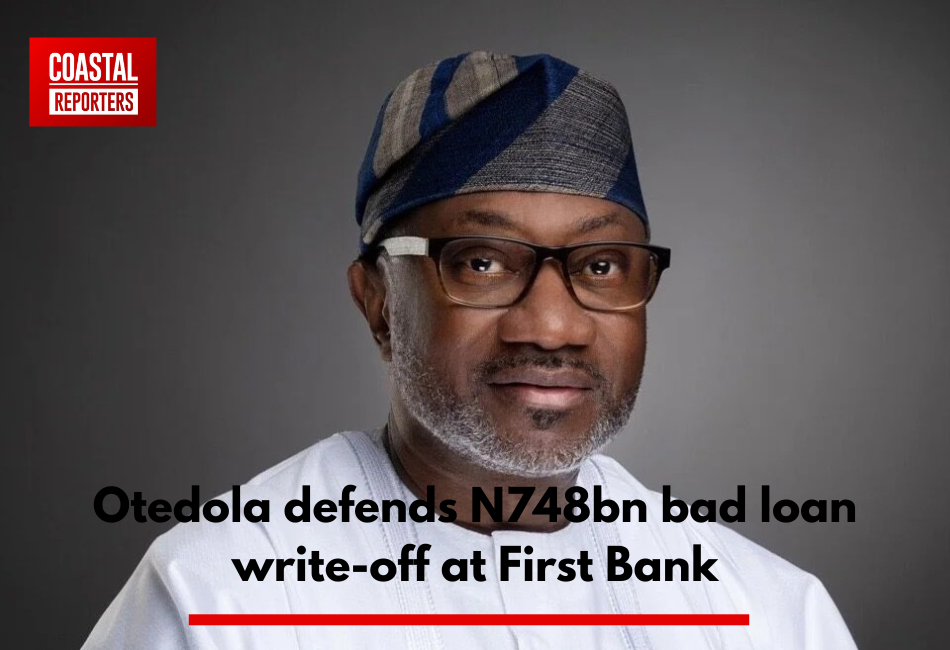
Despite the significant write-off, Otedola stressed that the bank’s core business remains solid. He pointed to strong revenue performance as evidence of the institution’s underlying financial strength.
He disclosed that the bank generated ₦2.96 trillion in interest income and ₦1.91 trillion in net interest income, providing enough capacity to absorb the cleanup while maintaining operational stability.
“The key point is this: our core business is still strong. The income engine gave us the resilience to take the hit and remain firmly standing,” he said.
Otedola expressed confidence in the bank’s future, noting that the cleanup has positioned First Bank well for the ongoing recapitalisation exercise and long-term growth.
“Going into 2026, First Bank is lighter, cleaner, and better prepared for the recapitalisation era and serious growth. Clearing bad loans, combined with strong earnings and long-term thinking, is how real value is created,” he concluded.