

Africa Faces Fallout from Middle East War – Experts
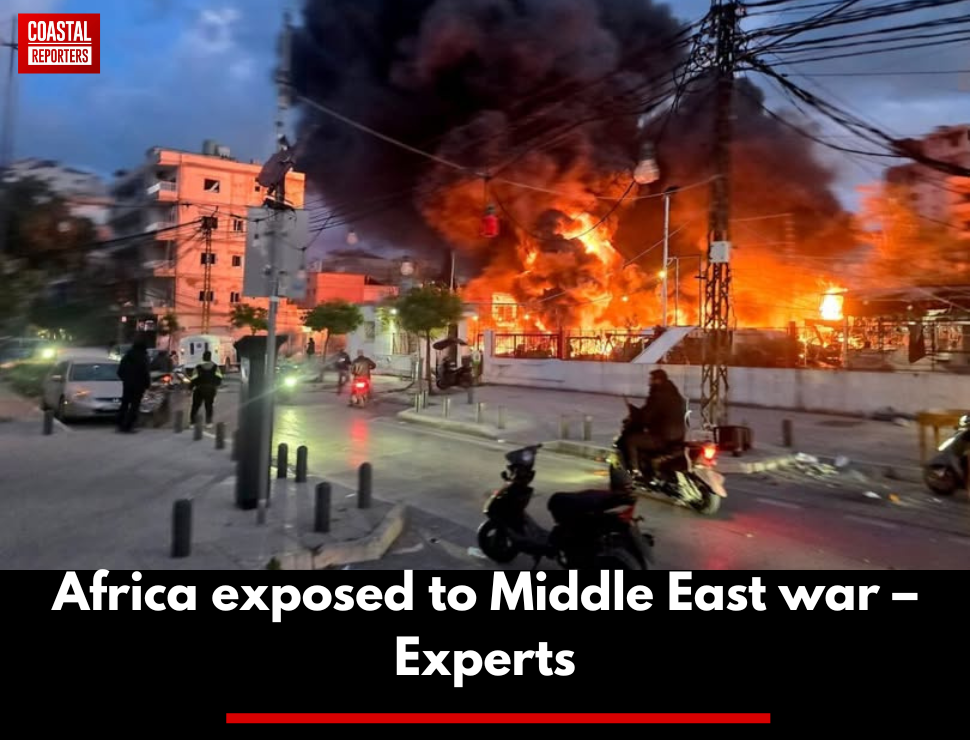
Africa is increasingly feeling the ripple effects of the growing conflict in the Middle East, as several countries on the continent host foreign military bases that fall within the range of Iranian missiles. Rising oil prices and disruptions to global shipping are also beginning to affect African economies, leaving the region vulnerable to events largely beyond its control.
According to Hubert Kinkoh, a senior researcher at the CARPO think tank, Africa is “structurally exposed” to the ongoing conflict.
He explained that the continent’s reliance on energy imports, the presence of foreign military installations, and its proximity to critical maritime chokepoints mean that developments in the Middle East can quickly impact African nations.
Potential Targets
Parts of the Horn of Africa could potentially become targets if the conflict escalates. One notable location is Camp Lemonnier in Djibouti, where around 4,000 US military personnel are stationed.
The base sits less than 160 kilometres from Yemen, where Iran-backed Houthi rebels possess ballistic missiles, anti-ship missiles, and drones. Although the Houthis have not yet joined the conflict, they have previously disrupted international trade by attacking vessels in the Red Sea during the Israel-Hamas war.
Somaliland, located south of Djibouti, may also face risks. The region hosts a major port and military facility in Berbera operated by the United Arab Emirates, another adversary of Iran.
Israel recently became the first country to formally recognise Somaliland’s independence from Somalia. A Western diplomat told AFP that Israeli troops may already be present in the territory.
Kinkoh noted that although Berbera has not been identified as a confirmed target, its strategic position near the southern entrance to the Red Sea makes it vulnerable if Iran-aligned groups broaden their list of potential targets linked to US or allied military operations.
Economic Consequences
The timing of the war is particularly challenging for African economies. Many countries had begun experiencing some financial relief as the US dollar weakened and global interest rates declined, offering a reprieve for heavily indebted nations.
However, the conflict is now disrupting global trade routes. Shipping companies are increasingly avoiding the Suez Canal and instead taking the longer and more expensive route around the Cape of Good Hope, driving up the cost of energy, food, and other goods.
Although Nigeria is a major oil producer, it has been unable to fully benefit from rising oil prices because much of its crude is sold through long-term contracts at lower rates. Additionally, the country still imports most of its refined fuel due to limited domestic refining capacity.
As a result, petrol prices in Nigeria reportedly rose by about 14 percent this week.
SBM Intelligence, a Nigerian think tank, said the crisis has highlighted the government’s “wait-and-see” foreign policy approach, leaving the country’s economic interests vulnerable to global developments beyond its control — a situation that also applies to many other African nations.
African economies could also be affected through remittances. Hundreds of thousands of African migrant workers in Gulf countries may face uncertainty if the conflict worsens. Past crises in the region have shown that many African governments lack proper evacuation plans or emergency support systems for their citizens abroad.
Diplomatic Challenges
Some African nations are being criticised for doing too little in response to the crisis, while others are accused of overstepping diplomatically.
South Africa, for instance, finds itself in a sensitive position. The country has already strained relations with the United States due to its criticism of Israel and earlier hosted Iranian warships for naval exercises in January. Although the government later distanced itself from the exercises, saying the military acted without presidential approval, the move has drawn scrutiny.
Timothy Walker of the Institute for Security Studies said South Africa may now struggle to convince the international community that it remains a neutral and non-aligned actor.
William Gumede, a professor of public management at the University of the Witwatersrand, warned that South Africa’s geopolitical stance could even risk US sanctions against some government officials.
“Our economy is highly vulnerable. We cannot afford to engage in global grandstanding,” he said.
Changing Geopolitics
In the long term, the conflict may further reshape geopolitical dynamics in Africa. Countries such as Turkey, Saudi Arabia, and the United Arab Emirates have expanded their influence across the continent in recent years through investments in ports and infrastructure, arms sales, military bases, and oil exploration, particularly in East Africa.
Some Gulf states have also been accused of fueling conflicts in countries like Sudan, Ethiopia, and Somalia.
However, analysts suggest the new war could also have unexpected benefits. According to SBM Intelligence, if the UAE becomes more focused on protecting its own territory and airspace, it may scale back its involvement in African conflicts, potentially allowing African-led peace initiatives more room to succeed.