


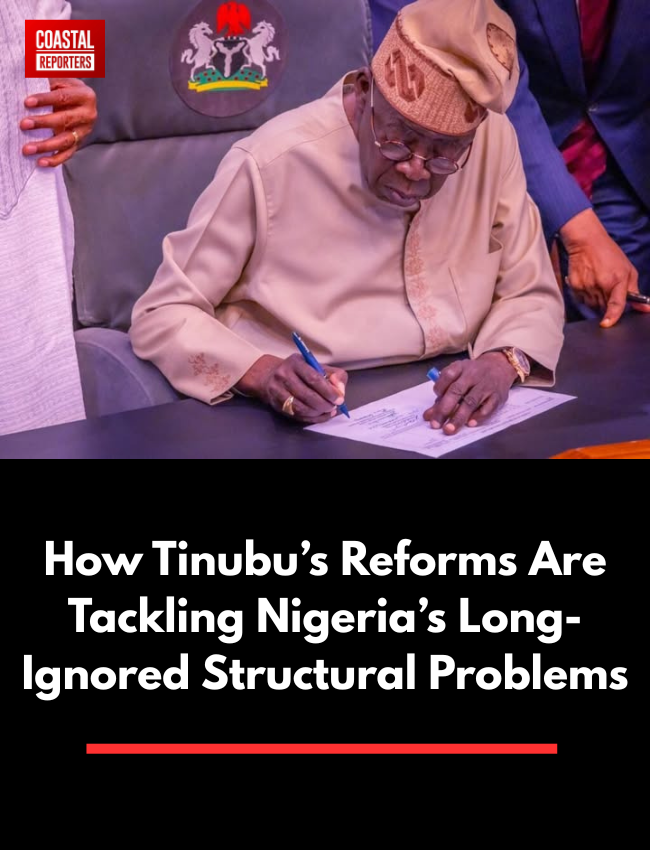
Tinubu’s Reforms and Nigeria’s Long-Ignored Economic Reality
When Nigeria returned to democratic rule in 1999, the country faced a very different economic and demographic reality.
At the time, Nigeria’s population was estimated at about 122 million people. Although government revenue was relatively modest, the pressure on public resources was far lower than what the country faces today.
Nigeria’s federally generated revenue then stood at roughly $11 billion annually, according to fiscal records from the late 1990s.
More than two decades later, Nigeria has changed dramatically.
Today, the nation’s population has risen to over 220 million people, making it the most populous country in Africa and the sixth most populous nation in the world.
Yet while the population has almost doubled, government revenue has not grown at the pace needed to support such a massive increase in demand for public services.
This imbalance between population growth and fiscal capacity forms the core challenge confronting the administration of President Bola Ahmed Tinubu, which has embarked on sweeping economic reforms.
Between 1999 and 2022, Nigeria added more than 100 million people to its population.
In practical terms, this means the government must now provide education, healthcare, infrastructure, security, and economic opportunities for nearly twice as many citizens as it did when democracy returned.
However, public revenue has not expanded proportionately.
When inflation and global economic changes are taken into account, economists estimate that $11 billion in government revenue in 1999 would equal roughly $30 billion today.
But Nigeria’s federally generated revenue in 2022 stood at about $18 billion, significantly below that inflation-adjusted value.
In simple terms, Nigeria is now trying to govern a far larger population with relatively weaker financial capacity.
This widening gap has quietly developed over the past two decades, creating structural economic pressures that are now impossible to ignore.
Economists often explain this situation with a simple household analogy.
Imagine a father who earned ₦11,000 in 1999 while supporting 10 children. Over the years, his family grows to 24 children, yet his real income drops to ₦6,500.
Despite the reduced income, the expectations of the larger family continue to rise. The children want better education, improved healthcare, housing, and higher living standards.
Without increasing income or cutting wasteful spending, such a household would inevitably face severe financial strain.
Nigeria’s economy reflects a similar challenge.
For many years, successive governments expanded public spending commitments while postponing the difficult reforms needed to strengthen national revenue generation.
Fuel subsidies, weak tax compliance, inefficiencies in public finance management, and economic leakages compounded the problem.
By the time the current administration took office in 2023, Nigeria was already facing one of the most complicated fiscal situations in its democratic history.
President Bola Ahmed Tinubu, widely regarded as a bold political strategist, moved quickly to implement reforms that previous administrations had long debated but avoided.
One of the most significant of these policies was the removal of the decades-long fuel subsidy.
For years, economists and financial experts warned that the subsidy regime was unsustainable. At its peak, the subsidy reportedly consumed over ₦4 trillion annually, a massive burden on Nigeria’s national budget.
Critics argued that the subsidy benefited fuel importers and smugglers far more than ordinary Nigerians.
Yet the fear of public backlash prevented earlier governments from decisively ending it.
Tinubu’s announcement during his inaugural speech that “fuel subsidy is gone” sent a clear signal that his administration was prepared to confront Nigeria’s long-standing economic challenges.
Another key reform was the unification of Nigeria’s foreign exchange market.
For years, the country operated multiple exchange rates, a system that created distortions, discouraged foreign investment, and encouraged currency speculation.
By moving toward a more transparent and unified exchange rate system, the government aims to restore investor confidence and improve the efficiency of the foreign exchange market.
These reforms have not been without short-term consequences.
Inflationary pressures and rising living costs have generated criticism from opposition groups and segments of the public.
But economic experts argue that difficult reforms often come with temporary hardship before long-term stability can be achieved.
Supporters of the reform agenda believe that the political cost of inaction would have been far greater.
Without structural adjustments, Nigeria risked sinking deeper into mounting debt, fiscal instability, and declining investor confidence.
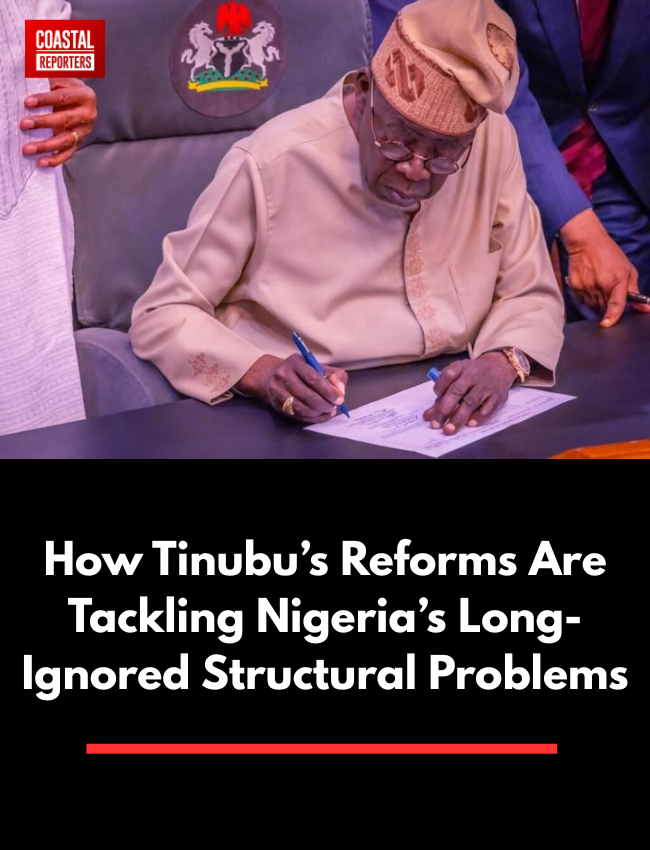
Many analysts believe the reforms now underway represent an attempt to correct economic weaknesses that have accumulated over decades.
Nigeria’s tax-to-GDP ratio remains among the lowest in the world, estimated at about 10 percent, far below the global average of 15–20 percent.
Improving tax compliance, expanding the revenue base, and strengthening economic productivity will be critical for the country’s long-term development.
The Tinubu administration has indicated plans to modernize tax systems, digitalize revenue collection, and strengthen fiscal discipline across government institutions.
History shows that nations often face defining moments when difficult reforms become unavoidable.
Countries such as India and Brazil implemented major economic changes in the past that initially triggered hardship but later laid the foundation for long-term economic growth.
Nigeria now appears to be entering a similar phase.
With its population projected to exceed 400 million by 2050, the country must build an economy capable of sustaining one of the largest populations on earth.
Achieving that goal will require sustained investment in infrastructure, education, technology, and industrial development.
Supporters of the current administration argue that Tinubu’s willingness to pursue politically risky reforms demonstrates a long-term vision for Nigeria’s economic future.
Rather than postponing tough decisions, the government appears determined to address structural issues that have accumulated for decades.
Ultimately, the success of these reforms will depend on effective implementation, transparency, and the government’s ability to protect vulnerable citizens during the transition.
But one reality is increasingly clear.
Nigeria can no longer continue with the same economic policies that shaped the country in 1999.
The nation is now larger, more complex, and facing far greater economic demands.
Leadership today is therefore not just about managing present challenges.
It is about building the economic foundations that can sustain the Nigeria of tomorrow.
Nigeria’s economic reality has changed profoundly since 1999. With population growth far outpacing government revenue, structural reforms have become unavoidable.
The National Patriots believe that the bold decisions taken by President Bola Ahmed Tinubu represent an effort to confront decades of fiscal imbalance.
Though painful in the short term, these reforms may prove essential for building a stronger and more sustainable Nigerian economy.
Princess Adebajo-Fraser, MFR
President, National Patriots
Governance and Policy Consultant
Writes from Coastal Reporters