


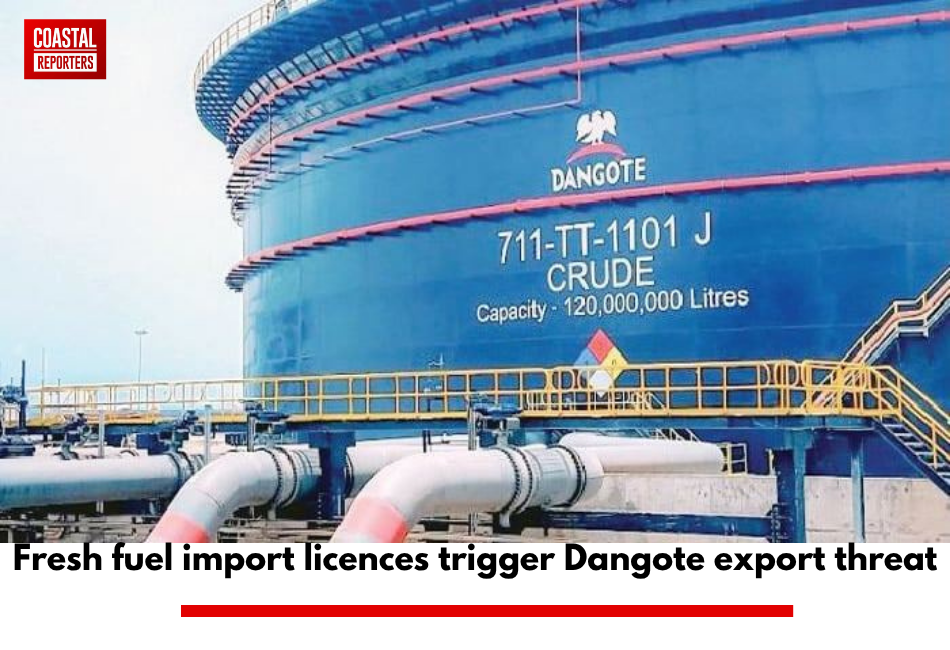
The Dangote Petroleum Refinery is considering exporting all its petrol, diesel, and aviation fuel from its 650,000 barrels-per-day facility in Lekki, Lagos—a move that could trigger fuel shortages across Nigeria.
This development comes as several African nations, including South Africa, intensify efforts to secure fuel supplies from the refinery amid disruptions in global supply chains.
Sources within the refinery revealed that the Dangote Group is weighing the export option due to the continued issuance of petrol import licences by the Nigerian Midstream and Downstream Petroleum Regulatory Authority. This is despite repeated denials by the regulator that no new licences have been granted since January 2026.
A senior official at the refinery stated that the company may shift fully to exports if the current policy persists, arguing that import approvals undermine local refining efforts. The official referenced comments by Aliko Dangote, who reportedly indicated that multiple marketers had recently received import licences.
However, the NMDPRA maintains that no new licences have been issued this year, explaining that current fuel imports are tied to approvals granted in late 2025. The regulator also emphasized that Nigeria is gradually reducing its dependence on imported fuel, with local refineries now supplying the bulk of daily consumption.
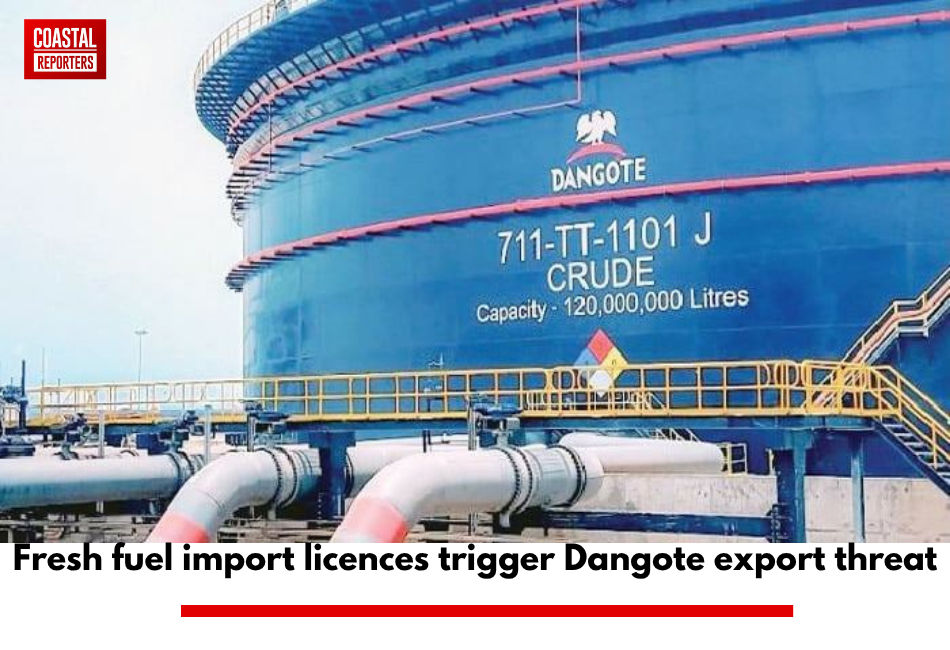
Industry data shows that in February 2026, domestic production averaged about 36 million litres per day, while national consumption stood at roughly 56 million litres. The shortfall was reportedly covered by previously accumulated stock.
Meanwhile, global tensions in the Middle East have disrupted traditional fuel supply routes, prompting countries to seek alternative sources. Aliko Dangote noted that the current situation is driven more by availability concerns than pricing, with demand for African refining capacity rising sharply.
Energy stakeholders warn that if the refinery proceeds with full-scale exports, Nigeria could face renewed fuel scarcity, long queues at filling stations, and rising pump prices. Such an outcome could reverse recent gains in stabilising the downstream sector and place additional strain on households and businesses.
Despite these concerns, industry leaders continue to advocate for stronger support for domestic refining, arguing that sustaining local production is key to Nigeria’s long-term energy security.