


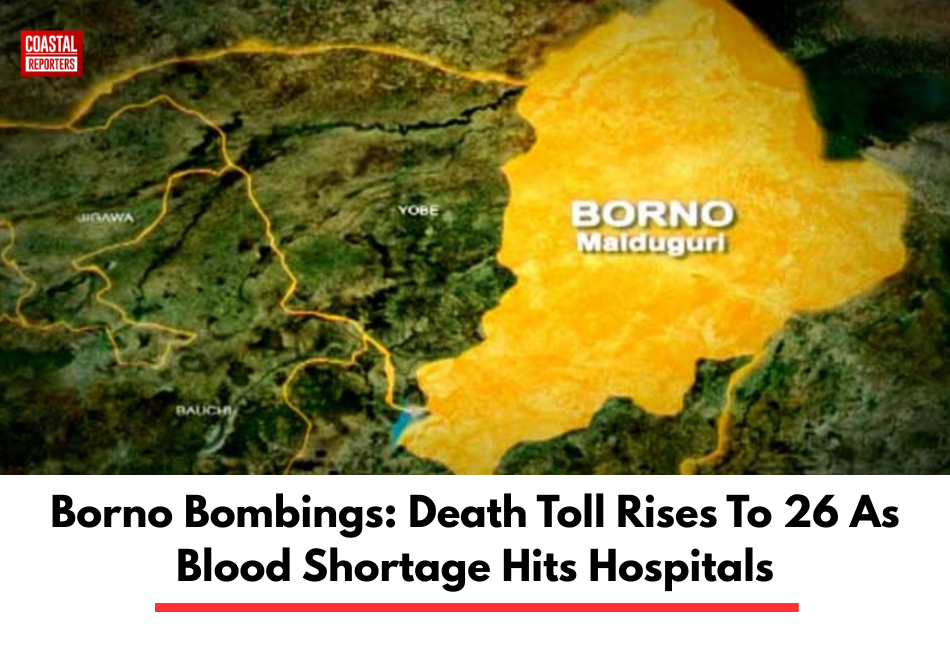
The aftermath of the coordinated bomb attacks in Maiduguri, Borno State, has grown increasingly dire, with the death toll rising to 26 and hospitals now grappling with a critical shortage of blood.
The explosions occurred around 7 p.m. on Monday at multiple locations, including the gate of the University of Maiduguri Teaching Hospital (UMTH), the Monday Market roundabout, and the Post Office. The attacks rank among the deadliest the city has witnessed in recent years.
As emergency teams continue rescue efforts, medical personnel and victims’ families report that the situation is worsening due to inadequate blood supplies needed to treat the injured.
The Nigerian Army has urged residents to remain alert, warning that terrorists may have deployed several suicide bombers across Maiduguri. According to the spokesman of Operation HADIN KAI, Lt. Col. Sani Uba, the attacks were carefully planned to cause maximum casualties.
“Preliminary reports suggest multiple suicide bombers were sent into Maiduguri to execute coordinated attacks at crowded locations,” he said, adding that security forces, alongside the Nigeria Police Explosive Ordnance Disposal unit and other agencies, responded swiftly to secure the affected areas.
The National Emergency Management Agency (NEMA), through its Zonal Coordinator Surajo Abdullahi, confirmed that 26 people have died while 146 others sustained injuries. Many victims are currently receiving treatment at UMTH and other hospitals within the city.
However, the growing number of casualties has overwhelmed medical facilities, prompting urgent appeals for blood donations.
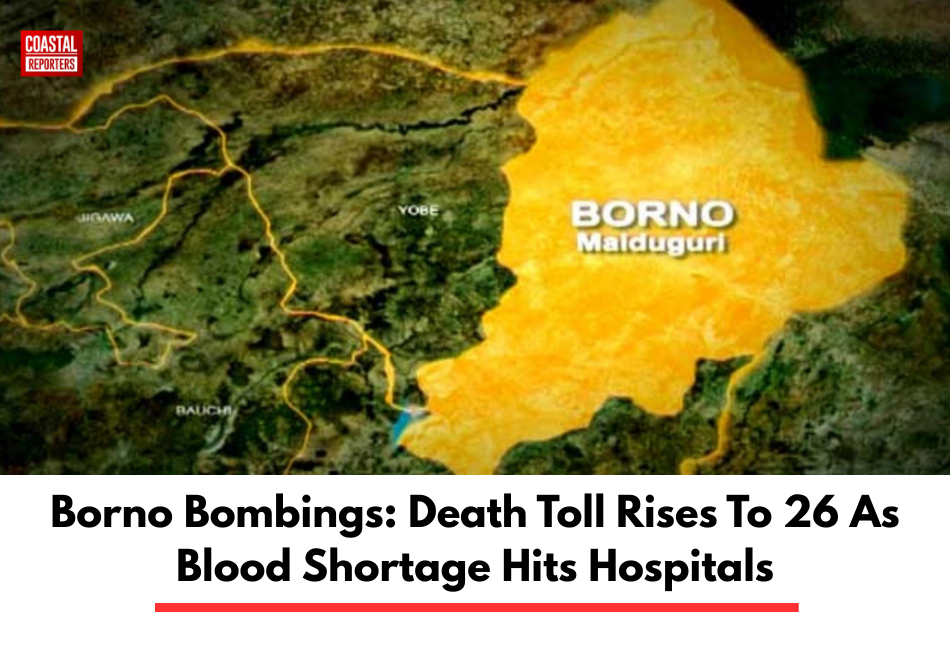
Health workers say the ongoing Ramadan fast has further limited the availability of donors, as many Muslims are unable to donate during fasting hours. They have therefore appealed to non-fasting individuals to come forward and help save lives.
The Nigerian Association of Resident Doctors (NARD) also condemned the attack, particularly the targeting of a medical facility.
“Hospitals are meant to be places of healing and hope. Attacking such a facility is both tragic and unacceptable,” the association stated.
Meanwhile, some residents have questioned the official casualty figures, suggesting the actual number of deaths may be higher. Eyewitnesses reported seeing large numbers of injured victims, with some communities already conducting multiple burials.
Survivors shared distressing accounts of the incident. Amina Aisami recounted how her husband was caught in the blast and remains unconscious due to severe injuries. Another victim, Abatcha Mustapha, described how he sustained a neck injury during the market explosion before being rushed to the hospital.
As the humanitarian crisis deepens, national leaders have continued to react. President Bola Tinubu directed service chiefs to relocate to Maiduguri and intensify security operations, assuring citizens that terrorism will be defeated.
Vice President Kashim Shettima also condemned the attacks, emphasising the value of human life and calling for an end to the violence.
However, criticism has followed the government’s response. Senator Ali Ndume urged authorities to focus more on security than politics, while security analyst Dr. Yahuza Getso described the relocation directive as ineffective, noting it reflects previously unsuccessful strategies.
Former Vice President Atiku Abubakar and other political figures have similarly called for a comprehensive review of Nigeria’s security approach amid renewed violence in the North-East.
For now, the most urgent concern remains the situation in Maiduguri’s hospitals, where doctors and families continue to appeal for blood donations in a race to save the lives of those injured.